
H-1B visa reform bill introduced in US Senate

Blinken blamed the COVID-19 pandemic for a backlog of visa applications from Indian nationals.

Ayan Pramanik and Shivani Shinde Nadhe report on the uncertainties that have dragged down shares of TCS, Tech Mahindra and HCL Technologies.

Australia is abolishing the 457 visa, which, brings temporary foreign workers into the country
The guidance is expected to spell out what constitutes specialised skill

The Biden administration on Friday issued a formal notification to delay the implementation of the previous Trump regime's controversial rule to raise mandatory minimum pay for foreign workers on H-1B visa, the most sought after among Indian IT professionals. The H-1B visa is a non-immigrant visa that allows US companies to employ foreign workers in specialty occupations that require theoretical or technical expertise. The technology companies depend on it to hire tens of thousands of employees each year from countries like India and China. The Department of Labour in its federal notification published on Friday said that it is considering whether to propose a further delay of the final rule's effective date and accompanying implementation periods that are currently scheduled to take effect on May 14, 2021, and July 1, 2021, respectively.

It's not just wrong. It's dumb. Mr President, would America really be greater without us?" he asked in a tweet.

Several individuals and organisations, including the US Chambers of Commerce and the National Association of Manufacturers, have filed a lawsuit against the Trump administration's recent rules related to the H-1B visa, terming them "arbitrary" and "haphazard" regulations that will undermine high skilled immigration into America. Early this month, the Trump administration announced new restrictions on H-1B non-immigrant visa programme which it said is aimed at protecting American workers, restoring integrity and to better guarantee that H-1B petitions are approved only for qualified beneficiaries and petitioners, a move which is likely to affect thousands of Indian IT professionals.

Two US lawmakers have introduced a bill in the House of Representatives that aims at granting an automatic right to H-4 visa holders to work in the country, a move which will benefit the spouses of thousands of foreigners, including Indians, and also address the labour shortage affecting American businesses. H-4 visas are issued to dependent spouses and children who accompany H-1B, H-2A, H-2B, and H-3 visa holders to the United States. Many H-4 visa holders are highly skilled people in their own right and previously had careers of their own or worked to support their families.
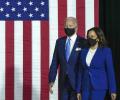
US President-elect Joe Biden plans to increase the number of high-skilled visas, including H-1B, and eliminate the limit on employment-based visas by country, both of which are expected to benefit tens of thousands of Indian professionals impacted by some immigration policies of the outgoing Trump administration.
In this scenario, the Indian information technology industry and government have two distinct items on the agenda before them.
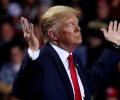
Trump told reporters that his administration will not tolerate firing of hardworking Americans in pursuit of cheap foreign labour.

The cabinet of the new government led by Rekha Gupta balances representation of all major communities that propelled the Bharatiya Janata Party to power in Delhi with a massive majority after over 26 years.

United States Citizenship and Immigration Services, which is the federal agency responsible to process the visas, on Monday started accepting applications for H-1B visas for the fiscal year 2019, beginning October 1.

Sunak announced that the Immigration Health Surcharge (IHS) would be hiked from 400 pounds to 624 pounds.

Recruitment from colleges should be done and local people be trained to add value to Indian companies, said Murthy.

President Donald Trump's executive order restricting entry of skilled foreign workers into the US, mainly on H-1B and L1 visas, has resulted in an estimated loss of $100 billion to companies in the US, a top American think-tank claimed. The executive order signed by Trump on June 22, that had temporarily banned issuing fresh H-1B and L-1 visas till December 31, caused a negative impact to the valuation of Fortune 500 firms equivalent to over $100 billion in losses, Brookings Institute said in a report released this week.

The US government has removed a regulation proposed by former president Donald Trump's administration that sought to narrow the definition of "specialty occupation" under the H-1B visa regime. The change comes as a relief for Indian information technology firms, which are among the largest users of such visas. "The Department of Homeland Security (DHS) has formally vacated a regulation that would have redefined the H-1B specialty occupation, restricted off site placement of H-1B employees, and otherwise increased employer compliance obligations. "The vacatur follows a federal court ruling that set aside the regulation because the agency did not have good cause to bypass notice and comment rulemaking, in violation of the Administrative Procedures Act," explained immigration law firm Fragomen.

He said his administration is going to enforce 'Hire American' rules that are designed to protect jobs and wages of workers in the United States.

Why the proposed United States rule change for H-4 (dependent) visa holders is not enough and what you should do about it

An influential immigration advocacy group representing Indian-Americans on Thursday urged the Biden administration not to issue the most sought-after H-1B work visa to any individual born in India, till the time the discriminatory country-cap on green cards or permanent legal residency is removed. The current per-country cap on issuing of green cards in the US has resulted in Indian professionals, mostly from the IT sector, having to wait for decades for their legal permanent residency. Issuing new H-1B visas to more Indians would add to this agonising painful wait for green cards, Immigration Voice said in a statement.

US to fix the immigration system that keeps American firms from hiring the top world talent they need.

H1-B holders in the US can rest assured that changes are soon coming which will bring both simplicity and certainty to your stay, including a potential path to citizenship: Trump.
The Biden administration has indicated that it is still undecided on ending the Trump-era ban on issuing new H-1B visas, with the Homeland Security Secretary Alejandro Mayorkas asserting that the US government's top priority is the acute needs of individuals fleeing persecution. The H-1B visa, the most sought after among Indian IT professionals, is a non-immigrant visa that allows US companies to employ foreign workers in speciality occupations that require theoretical or technical expertise. Technology companies depend on it to hire tens of thousands of employees each year from countries like India and China.

The year-wise number of Indians who renounced their citizenship was provided by External Affairs Minister S Jaishankar in response to a question in Rajya Sabha.

The Biden administration has announced that it is delaying the H-1B policy of the previous Trump administration on allocation of the popular foreign work visas by continuing with the lottery system until December 31, 2021, to give the immigration agency more time to develop, test and implement the modifications to the registration system. On January 7, the US Citizenship and Immigration Services (USCIS) announced to do away with the traditional lottery system in deciding the successful applicants for the H-1B visas. The H-1B visa is a non-immigrant visa that allows US companies to employ foreign workers in specialty occupations that require theoretical or technical expertise.

The legislation aims at eliminating a country-by-country cap on visas offered to skilled workers for obtaining a green card.

'Trump's disregard for norms and institutions could prove very costly for America's social fabric.'
Some foreign guest workers in the US will be able to re-submit their applications for the H1-B visa, the most sought-after non-immigrant visa among Indian IT professionals, if their petition was solely rejected because it was based on the initial registration period, according to a federal agency. According to the US Citizenship and Immigration Services (USCIS), such re-submission of applications is for those whose applications have been rejected or administratively closed solely because the requested start date was after October 1, 2020. The H-1B visa allows US companies to employ foreign workers in speciality occupations that require theoretical or technical expertise.
Economic experts fear massive layoffs in various sectors of the American economy due to the current economic distress that is only going to deteriorate in the coming months. A record 3.3 million Americans have filed initial jobless claims for the week ending March 21. Even as the peak of coronavirus in the US is two weeks away, millions of people in the country have lost their jobs.

Working while studying is an incredible way to build your professional network, learn hands-on experience, and understand the global working environment, suggests Ajay Sharma, president and founder, Abhinav Immigration Services.
While the denial rate has dropped slightly to 21 per cent in 2019 from 24 per cent in 2018, the National Foundation for American Policy has said it is much higher for Indian IT companies like Tata Consultancy Services (TCS) and Wipro and very low for American companies like Amazon and Google. For instance, the denial rate for TCS and Infosys in 2019 was 31 per cent and 35 per cent respectively, whereas for Wipro it was 47 per cent and 37 per cent for Tech Mahindra. On the other hand, the denial rate for the new H-1B petitions in 2019 was just four per cent each for Amazon and Google. The denial rate for Microsoft during the same period was six per cent, and Facebook along with Walmart was just three per cent each.
Let's take a look at companies that issue most visas.

The current H-1B minimum wage of USD 60,000 was established in 1989 and since then has remained unchanged.

In a statement, Amit Kapadia, executive director of the Highly Skilled Migrant Programme Forum said the changes effected from Tuesday were unfair. "The three-fold increase in the fees for settlement visas of dependent relatives is unjustified and very unfair," he said.

If elected, Trump said he would take action against companies that replace American workers.

All were released on $250,000 bond, the Department of Justice said.

Donald Trump said America needs highly skilled professionals.

Amid headwinds across global markets, US issues fresh restrictions on H-1B visas. Ayan Pramanik & Raghu Krishnan list out the many ways in which this impacts the Indian IT industry.

Norman Matloff, professor of computer science at the University of California, Davis, believes that the US has enough highly skilled engineers and raising the cap on H-1B would hamper the wages of senior workers already in the industry.
 © 2026 Rediff.com - Advertise with us - Disclaimer - Privacy Policy - Sitemap - Feedback - About us - Terms of use - Grievances